For decades, dark matter has been described as the universe's silent architect; invisible, but felt everywhere through gravity alone. A new theoretical model complicates that picture, and the twist it uncovers runs against intuition.
An invisible scaffold
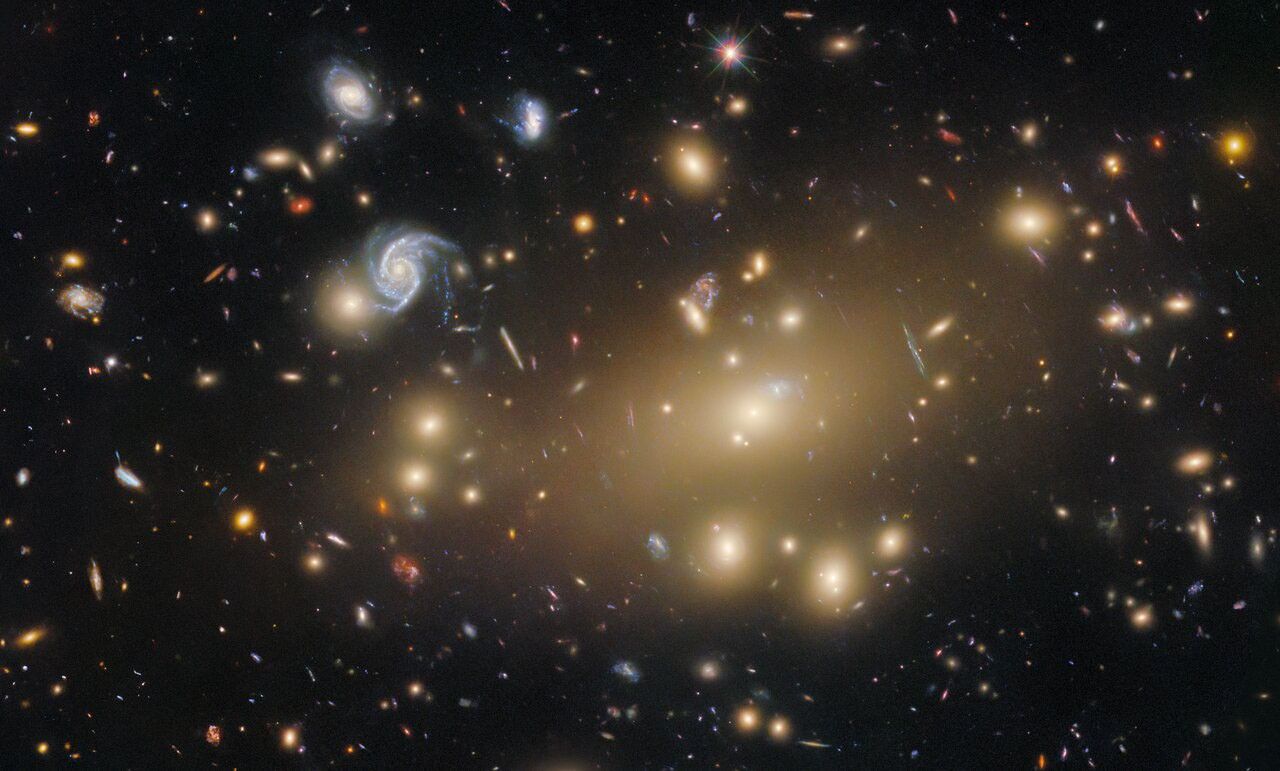
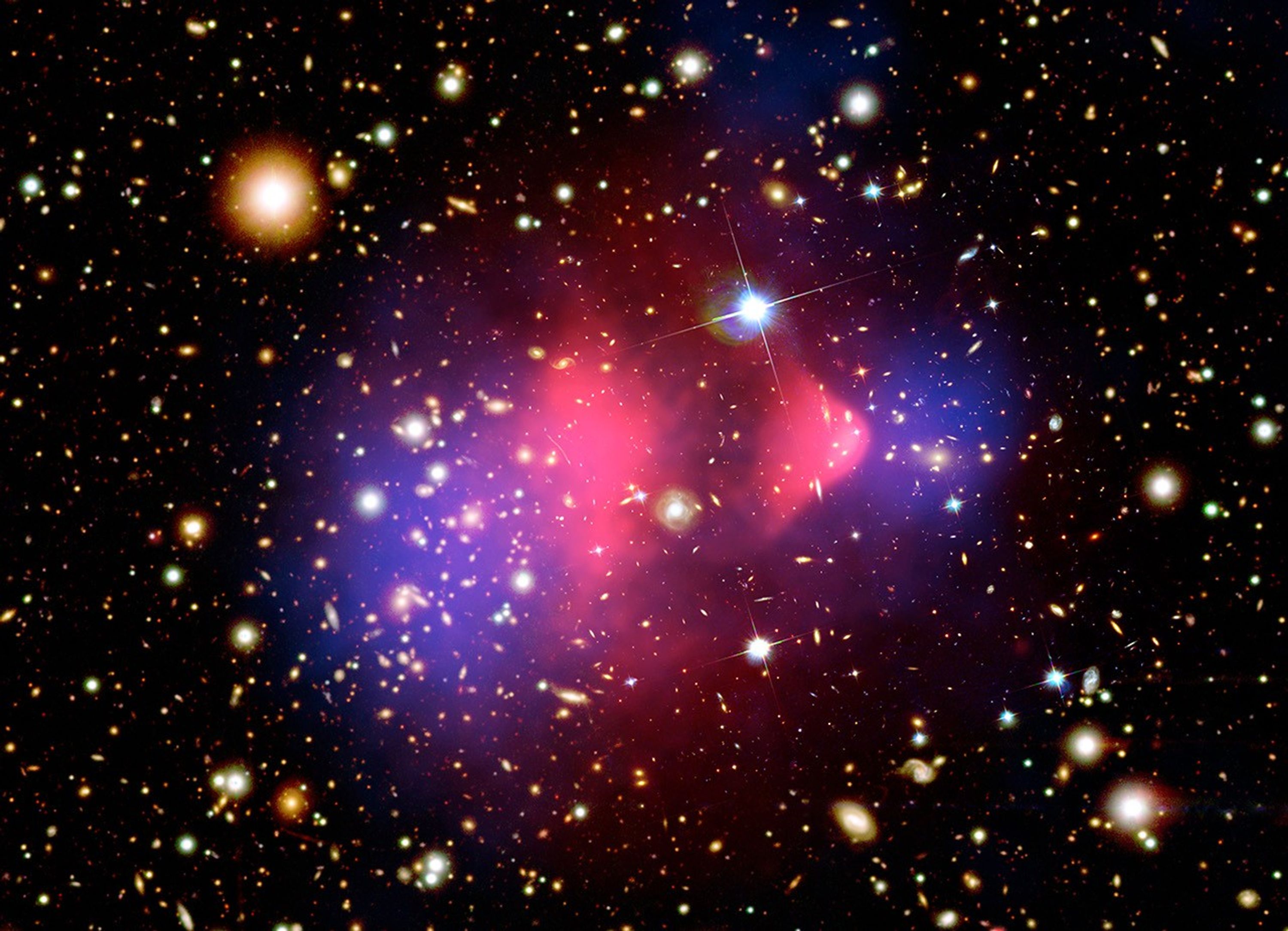
Dark matter does not emit, absorb, or reflect light, which keeps it hidden from every telescope ever built. Its presence is inferred entirely from its gravitational pull on galaxies, galaxy clusters, and the large-scale structure of the cosmos.
It's believed to make up roughly 85% of all matter in the universe, quietly shaping how galaxies form and cluster together. And yet, after decades of study, scientists still don't know what it's actually made of; or whether gravity is the only way it interacts at all.
A force that only dark matter feels
The new research explores a provocative possibility: that dark matter particles interact with each other through an additional attractive force, invisible to ordinary matter entirely. Researchers have taken to calling it a "dark force."
The intuitive expectation is simple. Stronger mutual attraction should pull dark matter together faster, accelerating the birth of galaxies and the cosmic structures they belong to.
The model says otherwise.
More pull, less growth
As the universe expands, the model shows dark matter particles effectively losing mass over time. Weaker mass means weaker gravity; and that decline cancels out the extra pull the hidden force provides.
"Even an attractive force can produce unexpected outcomes when combined with the complex physics governing cosmic evolution."
Dark matter particles clump together more efficiently under the hidden force.
Overall gravitational pull weakens as particle mass effectively decays.
Large-scale cosmic structure formation is slowed in many scenarios; not sped up.
Closing the gaps in the standard model
Modern cosmology has a habit of almost, but not quite, agreeing with itself. Measurements of cosmic expansion and galaxy formation don't always line up cleanly with predictions from the standard cosmological model. A hidden dark-matter interaction offers one possible explanation for those small, stubborn discrepancies.
If future observations bear this out, it could reshape how scientists understand:
- Galaxy formation
- Cosmic evolution
- Dark energy models
- Expansion history
Waiting on sharper eyes
For now, this remains a theoretical model; a compelling "what if" rather than a confirmed feature of the cosmos. Upcoming space missions and next-generation telescopes may finally have the precision needed to test whether this hidden interaction is real.
The universe, once again, seems to be reminding us that intuition is an unreliable guide. Sometimes more attraction doesn't mean a tighter grip; it means the rules have quietly changed underneath us.